
Tile vs Laminate Flooring: Which Survives Florida Humidity?
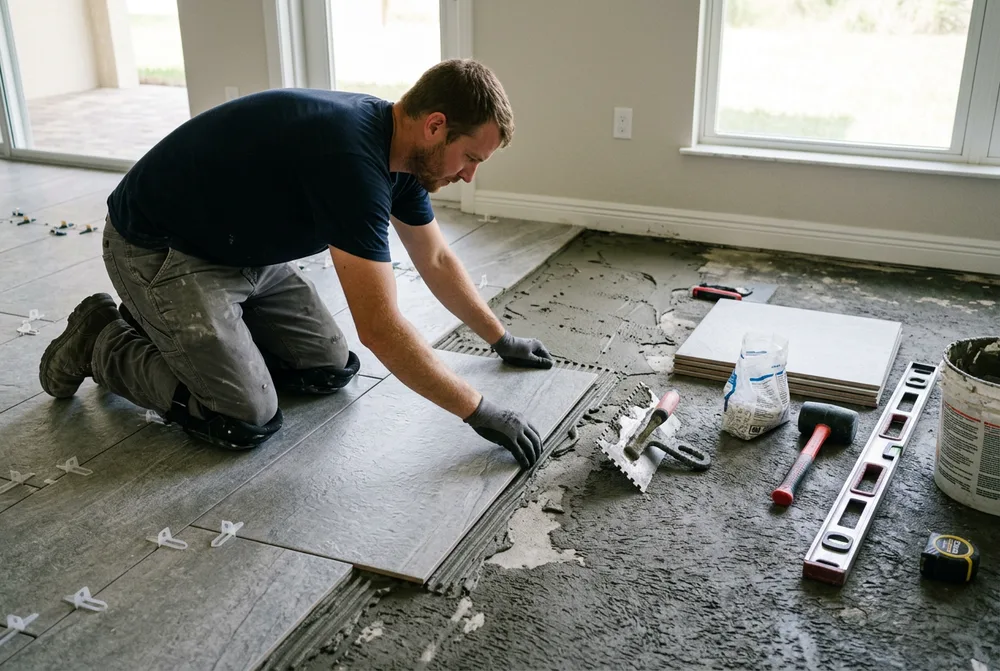
Tile is the safer choice anywhere water touches the floor. It does not soak up moisture. Florida's humidity cannot swell it or cup it. Laminate can work in dry rooms, but only over a vapor barrier rated for a humid climate. Skip that barrier and it usually cups or buckles within a year or two.
Why does Florida humidity change the tile vs laminate answer?
Florida does not get a real dry season. Fort Pierce and Vero Beach both run a humid subtropical climate. Relative humidity stays high almost all year in both cities.
Both cities peak in September, near 80 to 81 percent humidity. Even April, the driest month, still sits around 64 to 66 percent. There is no long dry stretch here.
In a drier climate, a flooring mistake sometimes gets a chance to dry out on its own. Florida does not offer that grace period. The moisture load is present nearly all year. That is why the vapor barrier choice has to be right the first time, not fixed later.
Which rooms should always be tile in a Florida home?
In a Florida home, the wet rooms pick themselves. Anywhere the floor meets standing water or daily splashes, a bathroom, a laundry room, or an entry off the yard, TPM lays tile and nothing else. Water sits on top of tile instead of soaking into it, so a mop bucket or a small overflow never starts the clock on a failure.
Dry rooms are where laminate earns its place. Bedrooms, halls, and living areas take it well. It installs faster and costs less than tile. The rule that never bends is water. A slow leak, or a room that turns out less dry than expected, is what starts the swelling and cupping.
If you are planning a bathroom remodel or a kitchen remodel, the wet-area rule stays simple. Tile wins near a tub, shower, sink, or dishwasher, every time.
Can laminate actually survive in a humid climate?
Yes, but only with the right barrier underneath it. Moisture barriers get rated by thickness, measured in mils. Wet or humid climates call for a barrier of 12 mils or higher. Dry climates only need 6 to 11 mils.
That thickness gap matters. The barrier is what actually stops moisture from reaching the laminate core underneath, not the flooring material itself. A thin, dry-climate barrier, or no barrier at all, is the most common reason a Florida laminate floor fails. It usually shows within a year or two.
What are the warning signs a laminate floor is failing to moisture?
Cupping is usually the first sign. The edges of each plank sit a bit higher than the center. The floor feels uneven underfoot before it looks obviously wrong.
Buckling comes next. Whole sections lift and pull away from the subfloor. TPM sees the same pattern often: laminate installed over a slab without a proper vapor barrier tends to cup at the seams within a year or two, not decades.
Catching cupping early matters. It is the difference between replacing one small section and replacing the whole room.
How much does tile vs laminate flooring cost?
| Material | 2026 market range | Typical range | Notes |
|---|---|---|---|
| Tile | $2 to $100 per sq ft | $4 to $10 per sq ft | A 150 sq ft room runs about $1,500 to $6,000 for materials plus installation |
| Laminate | Not published | Not published | TPM has not found a source it trusts for a Florida-specific laminate range, so we will not guess at one |
That tile range comes from This Old House's 2026 market guide. It is a published figure, not a TPM quote. Room size, how much old flooring has to come out, and how much slab prep is needed all move the real number up or down.
TPM would rather tell you honestly that we have not verified a laminate range than hand you a made-up one. Get a free estimate and we will measure your space and give you a real number, tile or laminate.
Which one actually lasts longer on a Florida slab?
Tile lasts longer on a Florida slab, in almost every case. Most homes in TPM's service area sit on a slab, and concrete slabs pass moisture upward through them. Tile does not care. It sits on top of that moisture without absorbing any of it.
Laminate's lifespan depends on two things: the vapor barrier underneath it, and whether the room genuinely stays dry. Get both right, and laminate can hold up well in a bedroom or hallway. Get either one wrong, and the clock on cupping starts the day it goes down.
Not sure which material fits which room in your home? See TPM's flooring installation service for how we handle slab prep and vapor barriers on every job. Flooring is also easy to fold into a bigger project, like remodeling and property services across a whole house.
Request your free estimate and Trenton will walk your rooms with you before you buy a single box of material.
Talk to TPM
Questions about your remodeling job? We serve Okeechobee and the surrounding area with honest, upfront advice.
FAQ
Related questions
Does laminate flooring hold up in humidity?
It can, but only with the right setup underneath it. A humid-climate vapor barrier and a dry room keep laminate stable. Skip either one and the boards usually swell at the seams within a year or two.
What is the best flooring for a humid climate?
Tile is the safest choice anywhere moisture is a real risk. It does not soak up water. Humidity and slab moisture cannot swell it or cup it. That is why bathrooms, laundry rooms, and entryways should stay tile in a Florida home.
How do you protect laminate flooring from moisture?
The floor needs a moisture barrier rated for a humid climate, not a dry-climate one. It also needs a room that stays genuinely dry, day to day. TPM checks the slab and picks the right barrier as part of our flooring installation process, before any planks go down.